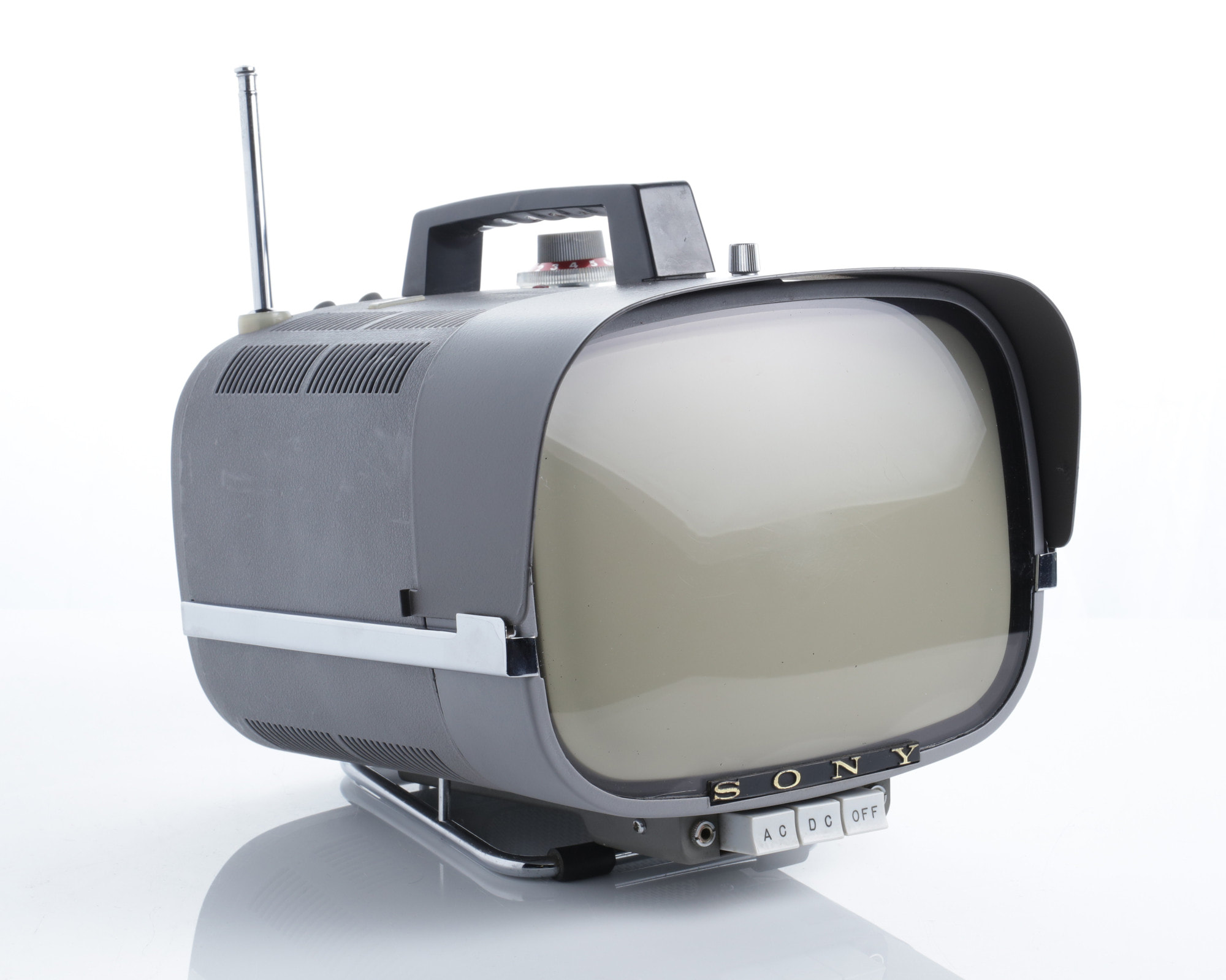
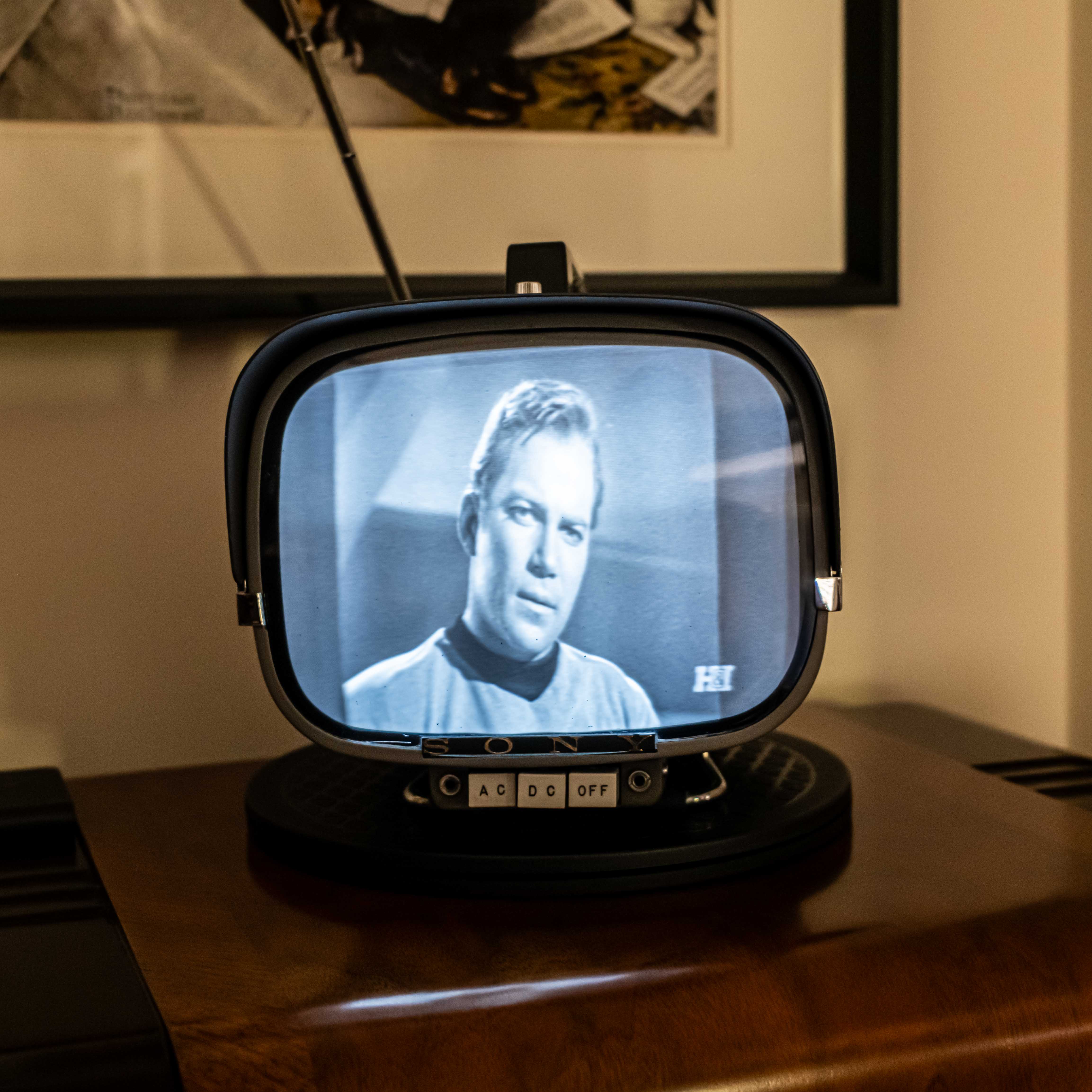
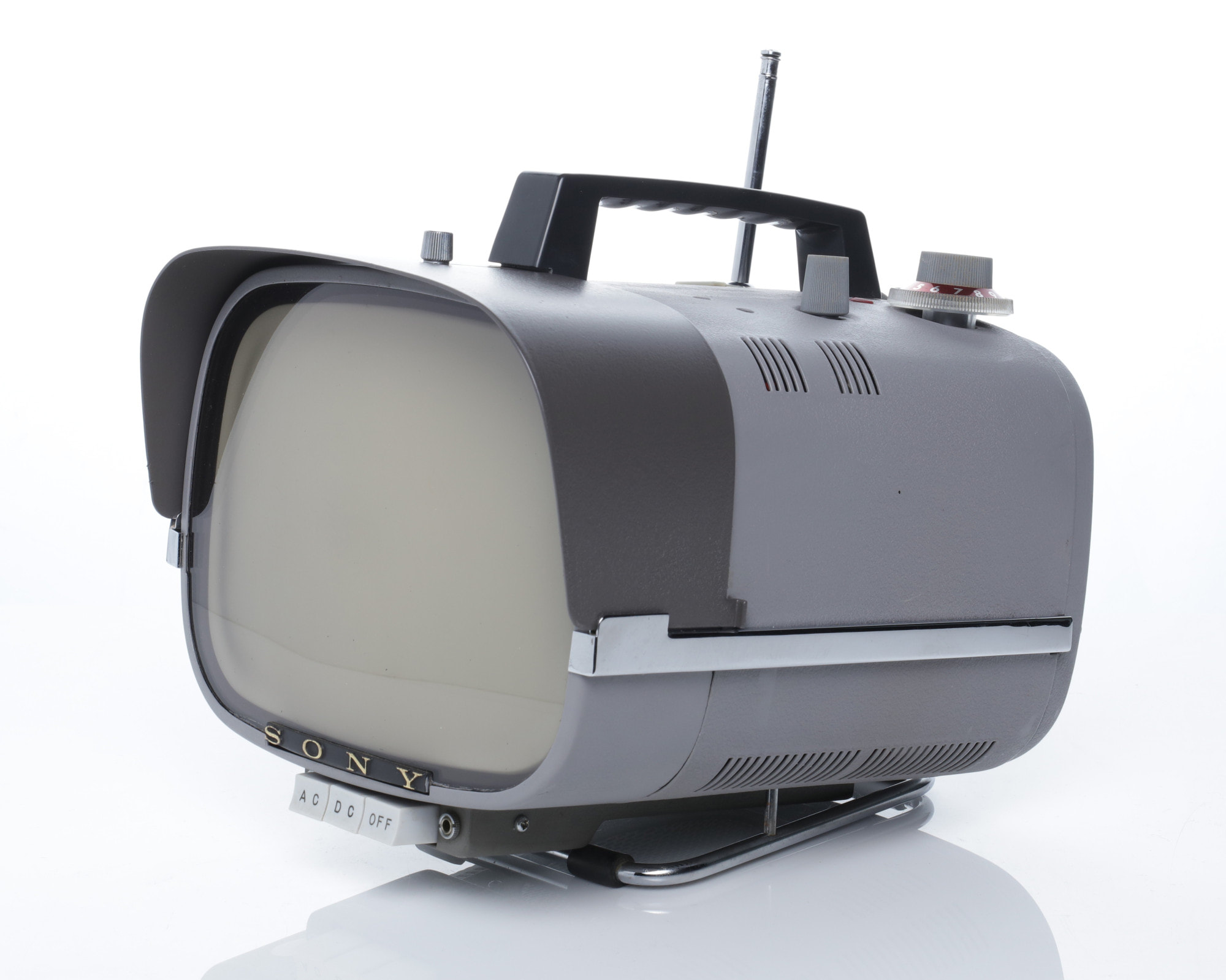
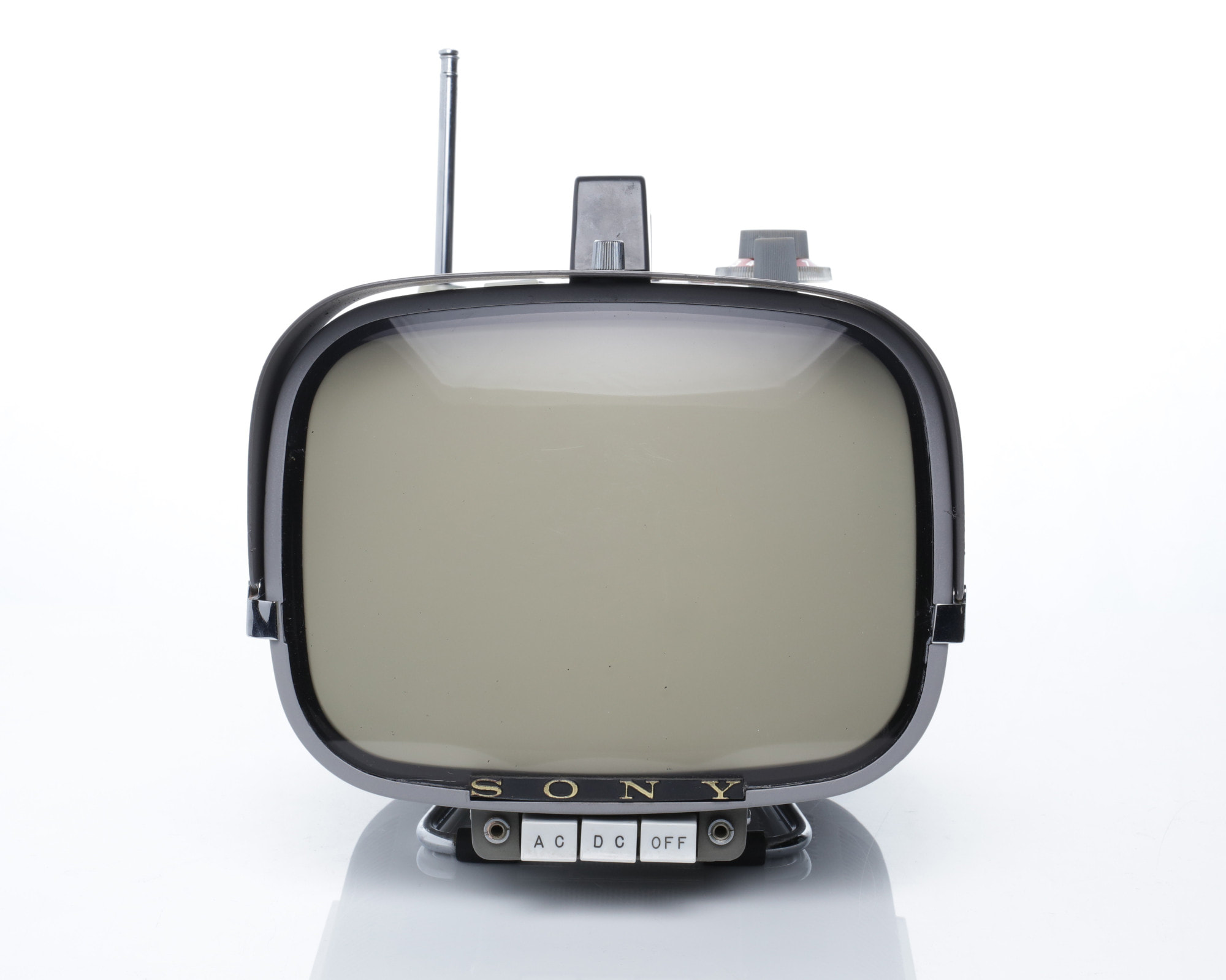
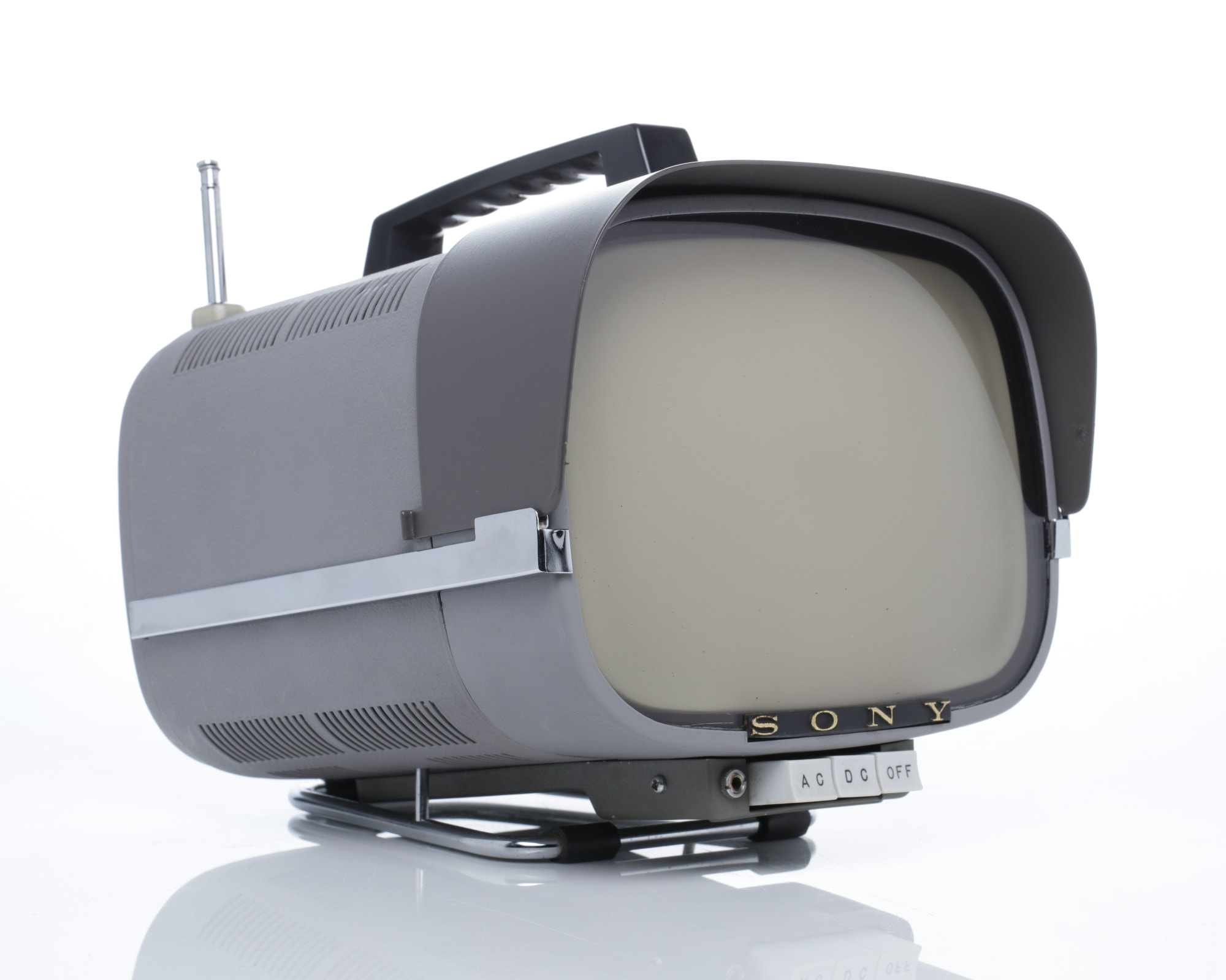
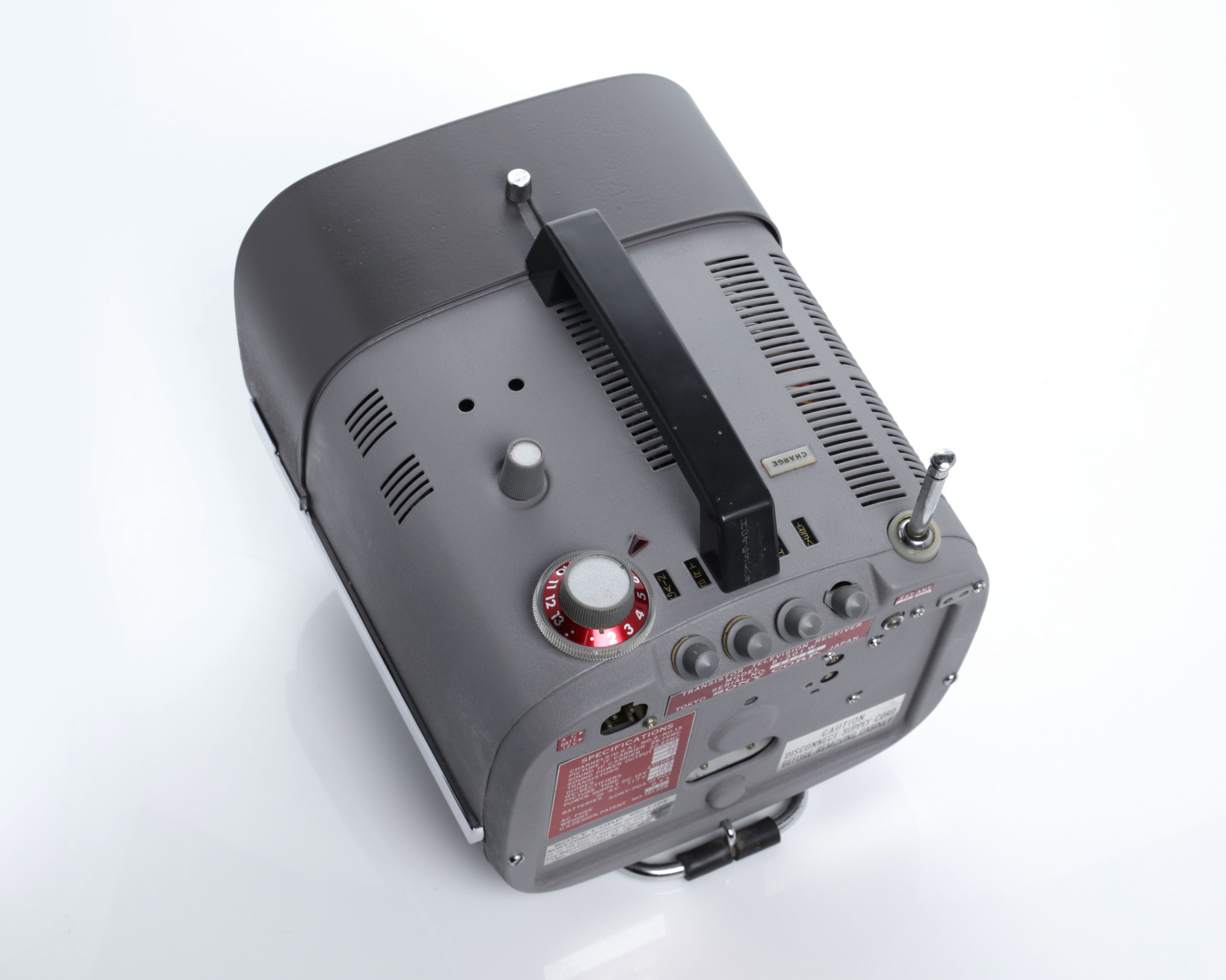
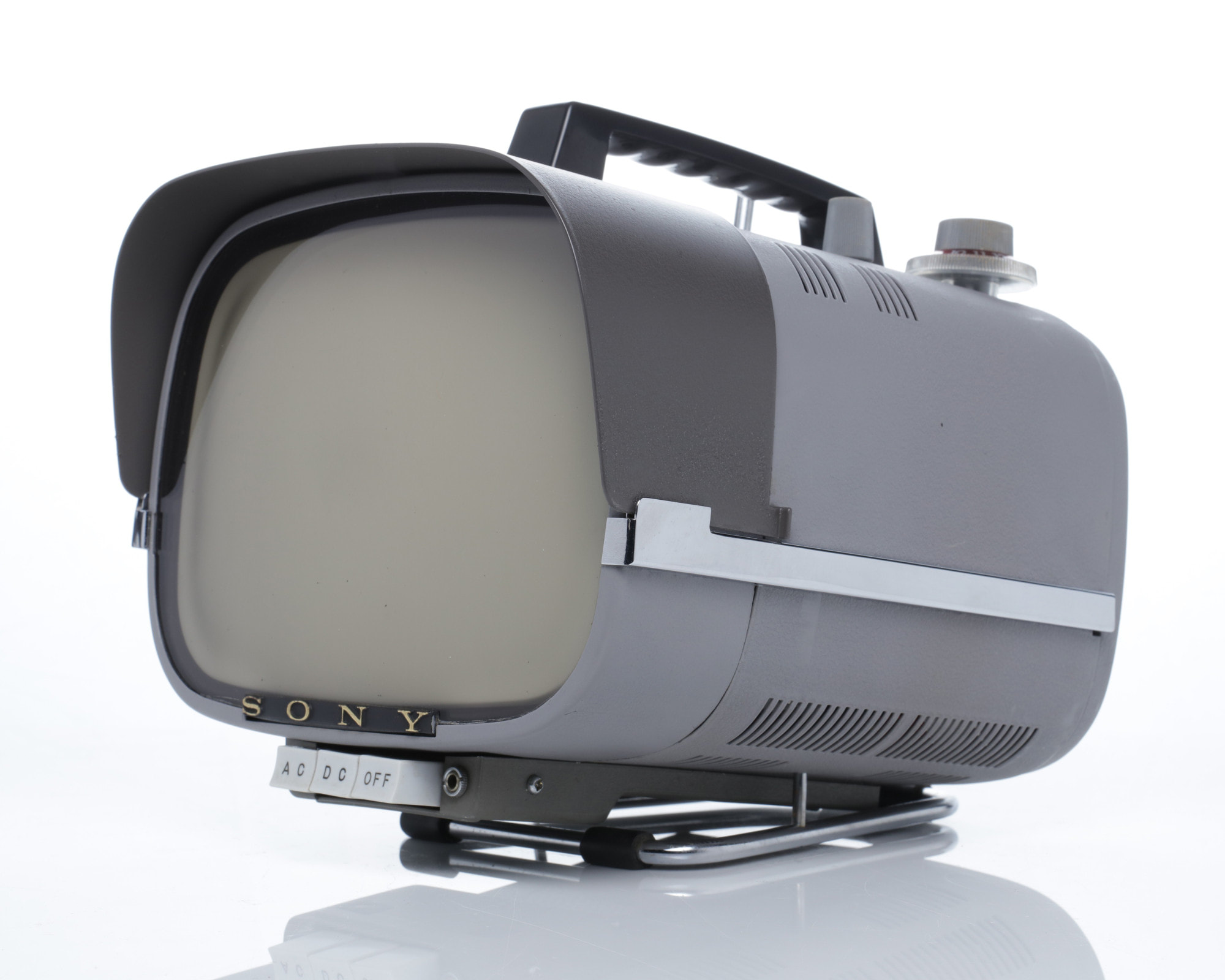
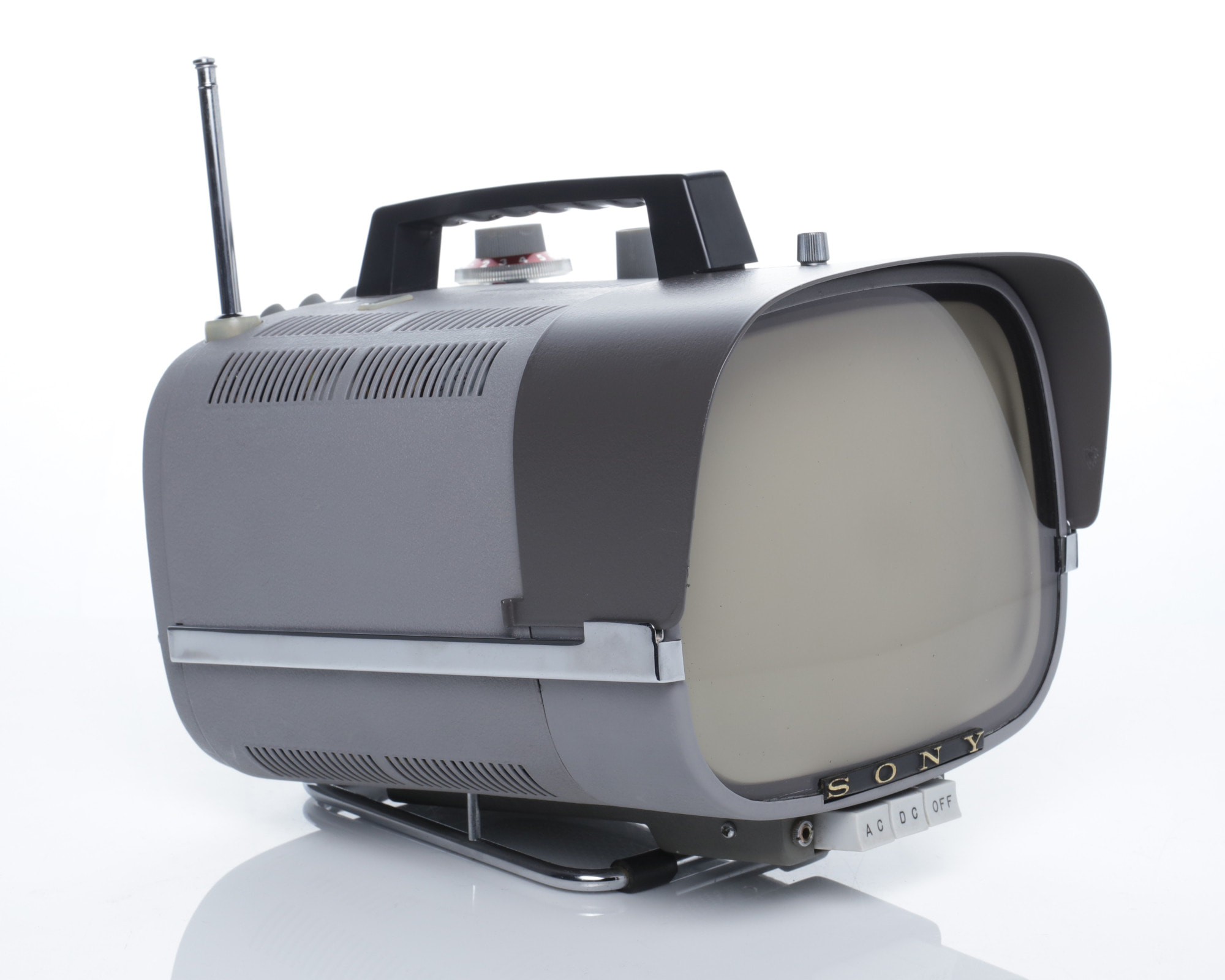
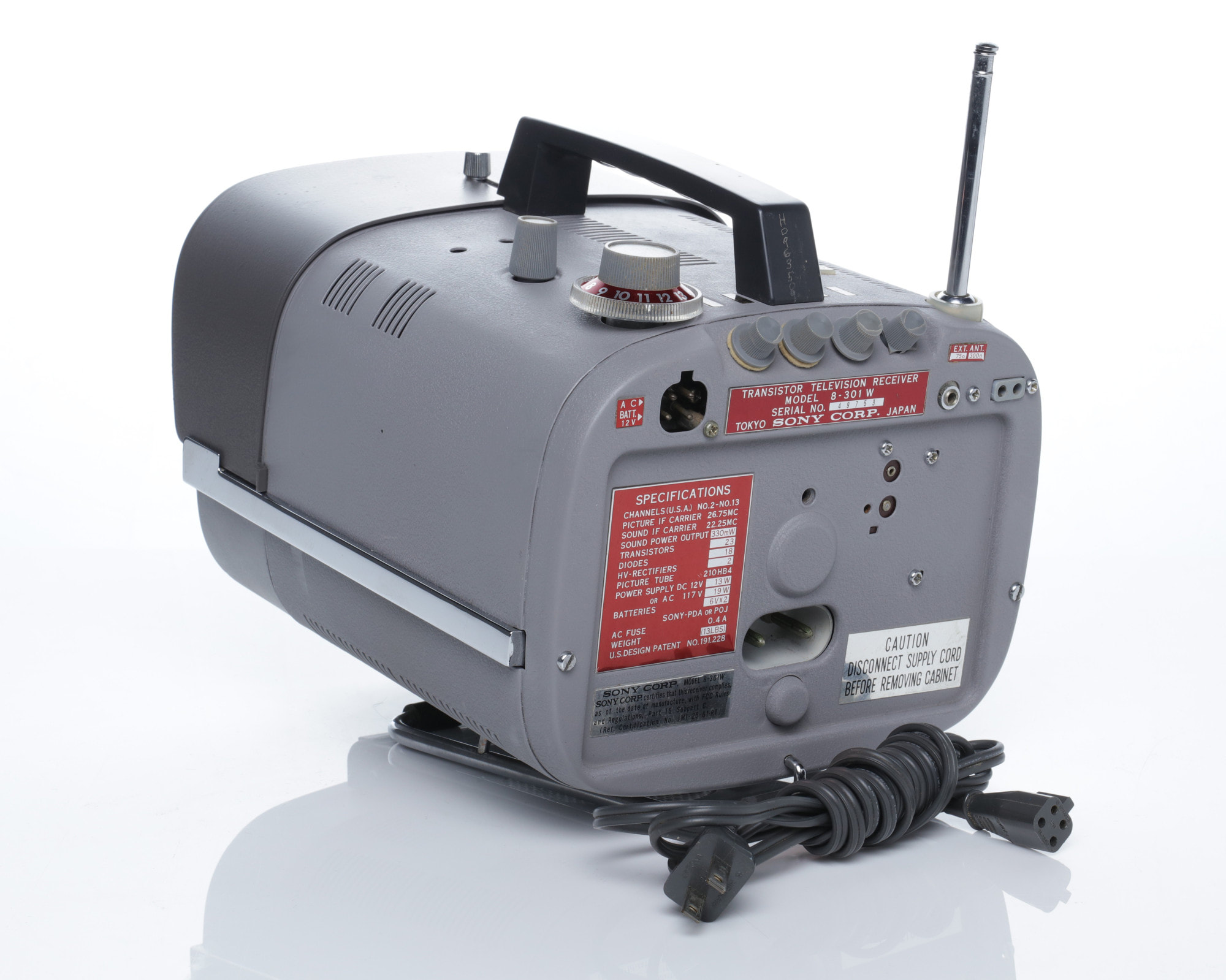
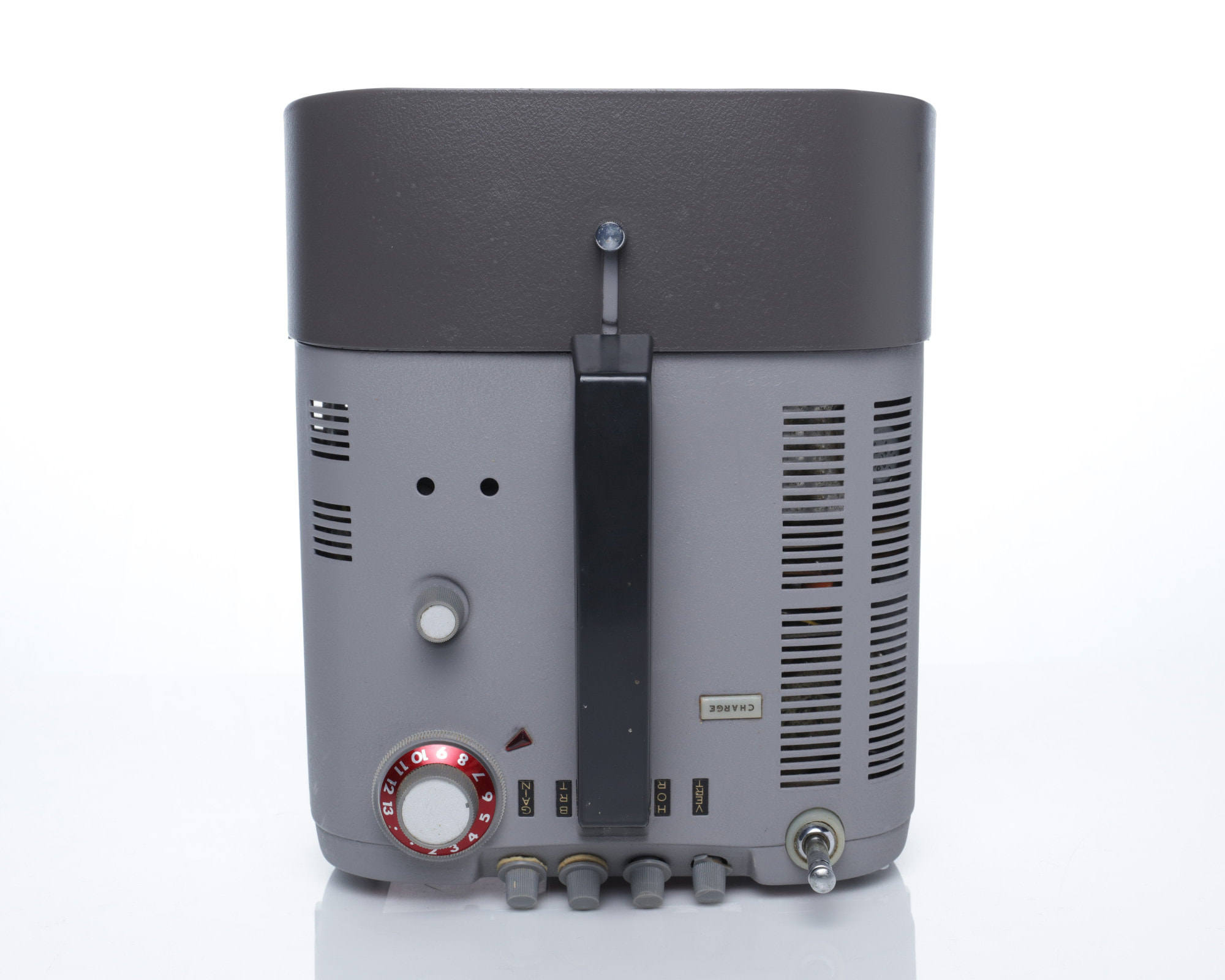
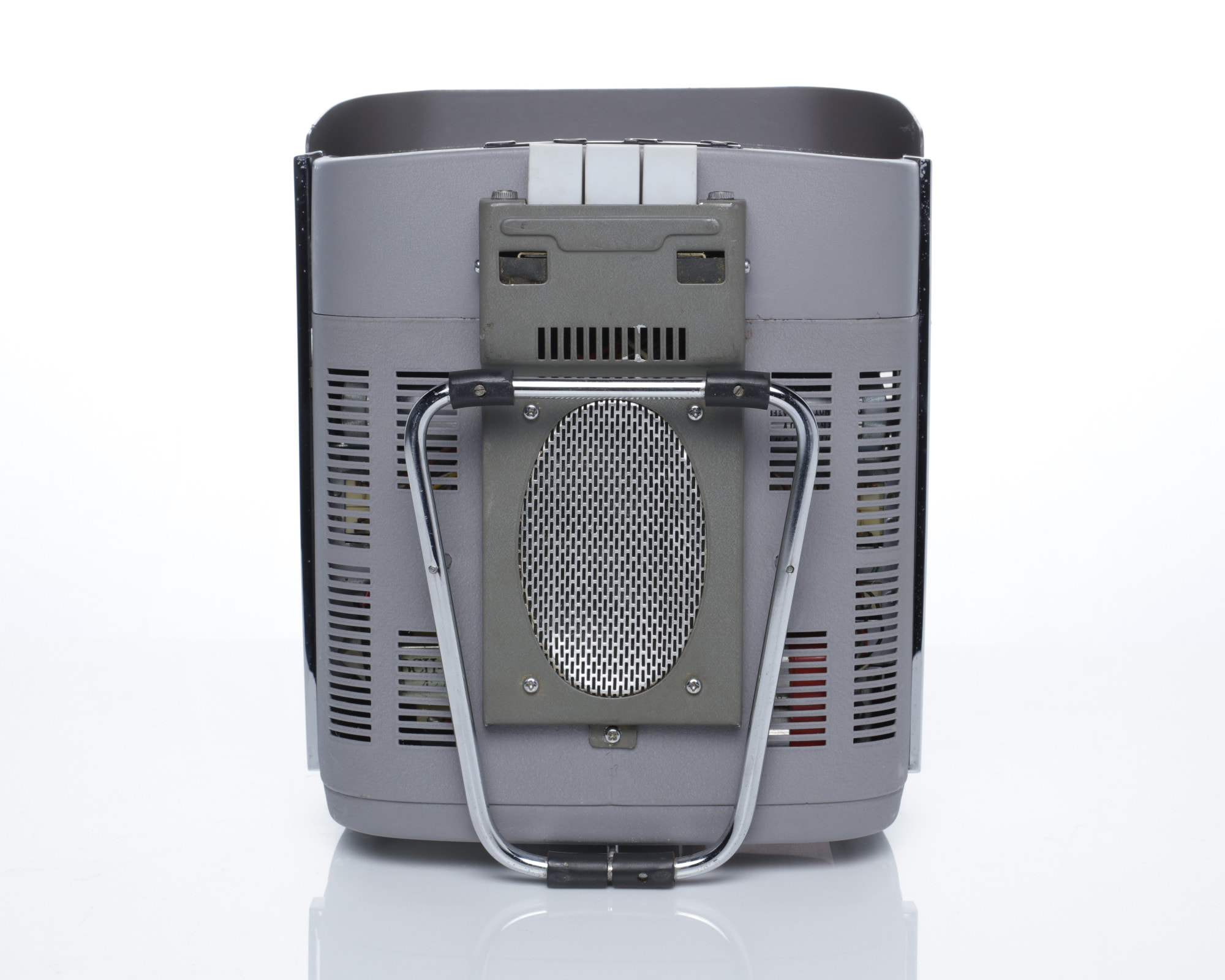
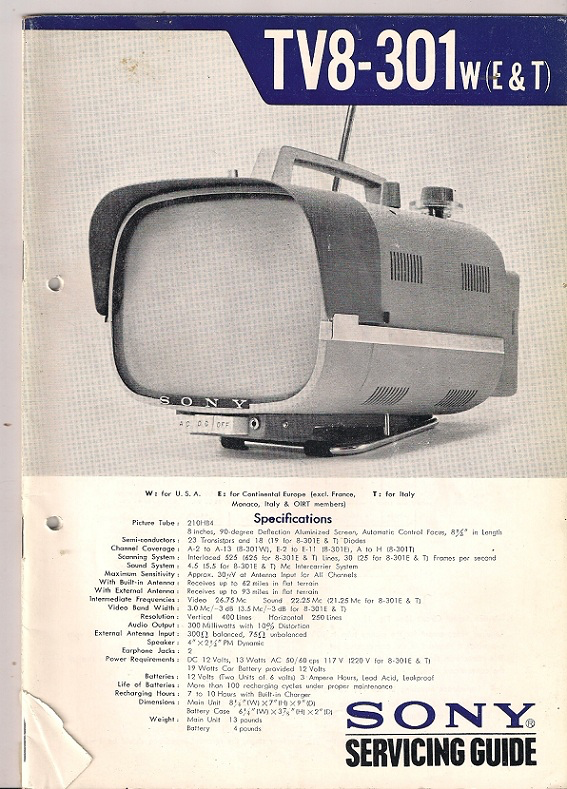
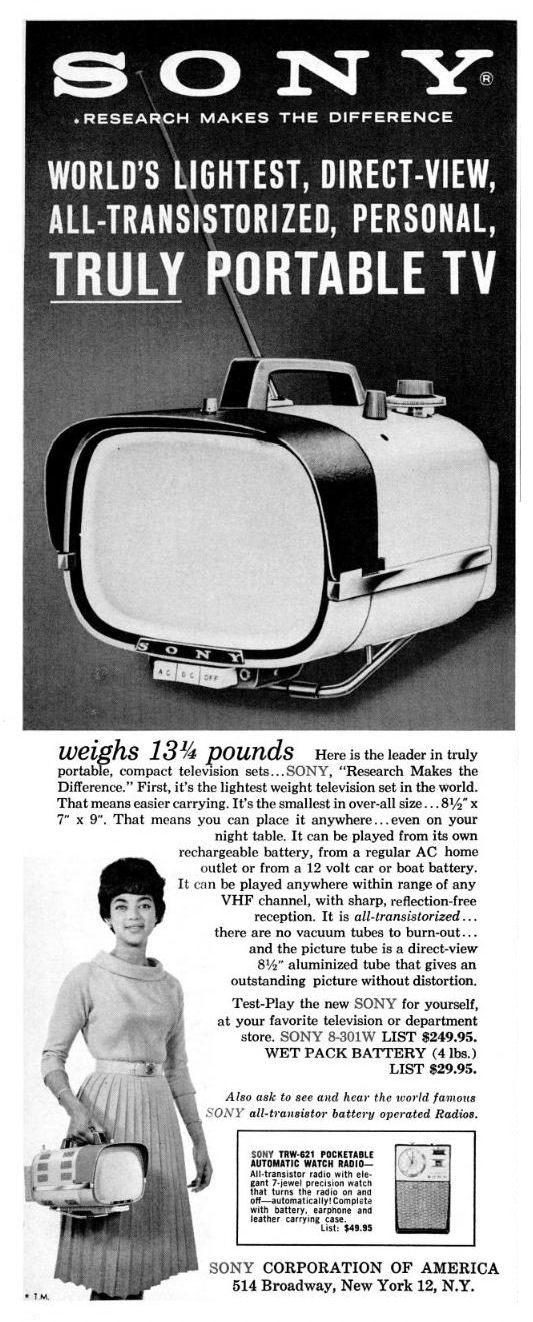
Introduced in 1960, the Sony TV8-301 was the company's first commercially successful portable television and helped establish Sony as a global leader in consumer electronics. Featured an 8-inch black-and-white picture tube housed in a compact, modern cabinet, it brought television viewing into a truly portable format at a time when most sets were large pieces of furniture. Today, the TV8- 301 is prized by collectors for its innovative engineering, sleek mid-century modern styling, and its significance in the evolution of portable television technology.
History – At the beginning of 1959, Sony founder (and President at the time) Masaru Ibuka spoke about his New Year's dream for a transistor TV in a magazine interview. Japan's first transistor radio had gone on sale only four years earlier. The next target was a transistor TV.
Ibuka spoke of it as a dream, but in fact things were already taking shape behind the scenes. Steady progress had already been made toward realizing that dream. Transistors with enough display power to be useful for TVs were comparably more difficult to create than transistors for radios, but Sony had perfected these special transistors the year before, in 1958, and work on developing a transistor TV was already underway.
Development accelerated sharply from the beginning of 1959. The first prototype was completed in April and numerous improvements and design studies were carried out. On December 25, Ibuka's New Year's dream came true with the announcement of Sony's first TV---the world's first direct-view TV. When it went on sale in May 1960, the TV8-301 8-inch portable transistor TV launched Sony's TV business.
As it happened, a group of market researchers representing US TV manufacturers visited Japan when the transistor TV was under development. Ibuka asked them whether they thought small TVs would sell or not. To a man, they said they would fail.
Looking back on this later, Ibuka said that it was common practice in the US to plan new products on the basis of market research, but it was also possible to carry out market research for the first time by actually putting something on the market. Since then, he said, he believed new products always involved market creation, too. "I'm now firmly convinced that brand new products must always create new markets."
The Sony TV8-301, launched in May 1960, was the world's first direct-view, portable all-transistor black-and-white television. Developed under founder Masaru Ibuka, it revolutionized personal viewing by replacing bulky vacuum tubes with 23 transistors and 19 diodes, establishing Sony as a major global electronics pioneer.
The TV8-301 features an 8-inch horizontal-mounted black-and-white picture tube designed to minimize cabinet depth. It weighed about 12 pounds and included a centered plastic carrying handle. It operates on AC household current, DC car adapters, or an optional rechargeable 6V lead-acid battery pack.
Popularized Sony's iconic centered corporate logo styling on the front fascia. The TV8-301 debuted at $249.95 (roughly $2,500 today), treating it more as an expensive luxury item than a mass-market appliance. Early solid-state circuits proved fragile under field conditions, earning it the affectionate internal nickname "frail little baby". The set was discontinued in 1962 after modest sales, but it successfully paved the way for smaller micro-TVs and Sony’s eventual dominance in the display market.
Two years later in 1962, the TV5-303---which was even smaller than the TV8-301---became a huge hit in the US.
Restoration – This unit was restored under the direction of Raj Vasudevan Sreekumary who is a prominent volunteer and restorer for the California Historical Radio Society (CHRS) in Alameda, California. Raj is well known for his expertise in vintage electronics, antique television restoration, and early broadcast equipment.
The metal cabinet, chassis and all circuit boards got complete disassembly and cleaning. The cabinet was repainted by Steve Kushman of CHRS. All electrolytic capacitors were replaced and resistors as needed. After reassembly a complete tuning of all circuits. The unit now performs reliably and, in many ways, better than the original.
Year of Manufacture: 1960
Size and Weight: Roughly 8 inches wide by 7 inches high by 9 inches deep (203 x 178 x 229 mm) and a net weight of 13 pounds (5.9 kg).
Watch Historical Video on YouTube here: www.youtube.com/watch?v=G5tanL2ADFs
History – At the beginning of 1959, Sony founder (and President at the time) Masaru Ibuka spoke about his New Year's dream for a transistor TV in a magazine interview. Japan's first transistor radio had gone on sale only four years earlier. The next target was a transistor TV.
Ibuka spoke of it as a dream, but in fact things were already taking shape behind the scenes. Steady progress had already been made toward realizing that dream. Transistors with enough display power to be useful for TVs were comparably more difficult to create than transistors for radios, but Sony had perfected these special transistors the year before, in 1958, and work on developing a transistor TV was already underway.
Development accelerated sharply from the beginning of 1959. The first prototype was completed in April and numerous improvements and design studies were carried out. On December 25, Ibuka's New Year's dream came true with the announcement of Sony's first TV---the world's first direct-view TV. When it went on sale in May 1960, the TV8-301 8-inch portable transistor TV launched Sony's TV business.
As it happened, a group of market researchers representing US TV manufacturers visited Japan when the transistor TV was under development. Ibuka asked them whether they thought small TVs would sell or not. To a man, they said they would fail.
Looking back on this later, Ibuka said that it was common practice in the US to plan new products on the basis of market research, but it was also possible to carry out market research for the first time by actually putting something on the market. Since then, he said, he believed new products always involved market creation, too. "I'm now firmly convinced that brand new products must always create new markets."
The Sony TV8-301, launched in May 1960, was the world's first direct-view, portable all-transistor black-and-white television. Developed under founder Masaru Ibuka, it revolutionized personal viewing by replacing bulky vacuum tubes with 23 transistors and 19 diodes, establishing Sony as a major global electronics pioneer.
The TV8-301 features an 8-inch horizontal-mounted black-and-white picture tube designed to minimize cabinet depth. It weighed about 12 pounds and included a centered plastic carrying handle. It operates on AC household current, DC car adapters, or an optional rechargeable 6V lead-acid battery pack.
Popularized Sony's iconic centered corporate logo styling on the front fascia. The TV8-301 debuted at $249.95 (roughly $2,500 today), treating it more as an expensive luxury item than a mass-market appliance. Early solid-state circuits proved fragile under field conditions, earning it the affectionate internal nickname "frail little baby". The set was discontinued in 1962 after modest sales, but it successfully paved the way for smaller micro-TVs and Sony’s eventual dominance in the display market.
Two years later in 1962, the TV5-303---which was even smaller than the TV8-301---became a huge hit in the US.
Restoration – This unit was restored under the direction of Raj Vasudevan Sreekumary who is a prominent volunteer and restorer for the California Historical Radio Society (CHRS) in Alameda, California. Raj is well known for his expertise in vintage electronics, antique television restoration, and early broadcast equipment.
The metal cabinet, chassis and all circuit boards got complete disassembly and cleaning. The cabinet was repainted by Steve Kushman of CHRS. All electrolytic capacitors were replaced and resistors as needed. After reassembly a complete tuning of all circuits. The unit now performs reliably and, in many ways, better than the original.
Year of Manufacture: 1960
Size and Weight: Roughly 8 inches wide by 7 inches high by 9 inches deep (203 x 178 x 229 mm) and a net weight of 13 pounds (5.9 kg).
Watch Historical Video on YouTube here: www.youtube.com/watch?v=G5tanL2ADFs